Intervals or Continuous Movement: Two Ways to Shape a Session
Intervals or continuous movement organize a workout in different ways. Compare the formats and choose a clear structure that suits your attention.
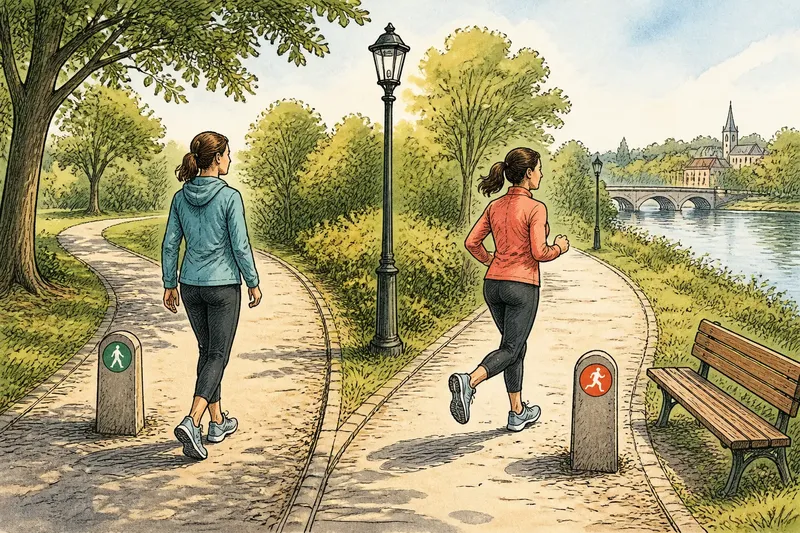
Intervals or continuous movement changes how you organize a familiar walk, ride, or jog: intervals mark shifts in effort, while continuous movement keeps a broadly even rhythm. The distinction is useful when the activity itself is settled but you want to decide how to structure the session.
One format gives you cues to follow; the other leaves more room to stay with a route and its natural pace. Neither is a test of fitness. The better fit depends on whether planned changes or an uninterrupted rhythm makes the activity easier to engage with.
Intervals or continuous movement suit different kinds of attention
Intervals alternate more-active periods with easier ones. A timer, a landmark, or a deliberate change in pace can mark each shift. The easier period is part of the structure: it separates efforts and gives you time to prepare for the next cue.
Continuous movement holds a relatively even, manageable effort without planned alternations. It does not require an identical pace from start to finish. A hill, a turn, or a change in footing may naturally alter your speed without turning the session into intervals.
Choose based on what helps you stay engaged. If one sustained pace feels monotonous, occasional changes can give your attention something concrete to follow. If a timer pulls your focus away from the route, a continuous session may feel simpler.
Choose effort cues that match the format
For intervals, decide what will signal a change and how the easier portion should feel. A brisk walk followed by a relaxed walk is enough to make the pattern clear; the active portion does not need to become an all-out effort.
For continuous movement, settle into a pace you can sustain without treating it as a contest. You can slow for a hill or pause briefly without abandoning the format. “Steady” describes the session’s broad structure, not a demand to ignore changing conditions.
Say you have a familiar park loop and feel restless after work. You begin with a gentle walk, then choose two lamp posts as a cue: walk briskly to the first and easily toward the next bench. If the easier stretch lets you settle before the next brisk walk, the cues are workable; if not, you can lengthen the easy stretch or continue at one even pace instead.
Keep interval cues simple and safe to follow
A cue should reduce decisions, not create constant calculation. A basic timer can mark changes, but route features can work just as well. Music is another option only when it does not interfere with awareness of traffic, other people, or your footing.
Let the surroundings take priority over the plan. If a cue arrives at a busy crossing or on uneven ground, wait until the route is clear before changing pace. If the active portion makes it hard to settle during the easier one, lower the effort or make recovery longer.
Keep most parts of the session familiar while learning whether intervals suit you. Changing the route, pace, cue, and activity all at once can make it harder to tell which choice affected the experience.
Let continuous movement respond to the route
A continuous session can follow a familiar path or a simple intention, such as walking comfortably to a nearby destination and returning at a similar effort. A watch may help you notice elapsed time, but it is not essential to the format.
Use the route as information rather than a demand. A gradual rise may call for a slower pace, while a clear, level stretch may feel easier. These small changes remain compatible with continuous movement as long as you are not arranging the session around planned hard and easy bouts.
If your attention wanders, focus on the path ahead, your step rhythm, or the way your shoulders feel. That gives the session a point of attention without turning every stretch into a challenge.
Which format fits your situation?
Are intervals suitable for beginners?
They can be, if the changes are easy to control. A beginner might alternate brisk and relaxed walking, or choose an even, comfortable pace instead; the simpler option is the one that is easier to manage.
Can intervals work without a timer?
Yes. Use a familiar corner, a bench, or another visible route feature to mark a change. Pick cues that leave you able to watch your surroundings and footing.
Does continuous movement mean keeping the same speed?
No. The format avoids planned alternations, but natural changes in pace are expected. Slowing for a hill or pausing briefly does not erase the session’s broadly continuous character.
Can you switch formats during a session?
Yes. If intervals are distracting, continue at an even pace; if continuous movement feels dull, add a few comfortable, clearly separated changes. The format is a way to organize the activity, not a rule that must be followed regardless of circumstances.
Use a short review to choose what comes next
After a session, notice whether you paid more attention to a timer, the route, or your own pace. Ask whether the structure was easy to remember and whether its cues helped you stay engaged. Those observations can guide the next choice without turning exercise into a scorecard.
If interval cues felt confusing, use a simpler landmark or switch to a continuous rhythm next time. If continuous movement felt monotonous, choose a more engaging route or add a few planned changes. The useful distinction between intervals or continuous movement is how each organizes attention, so make the next session’s structure easy to describe and follow.